


编者按:7月13日,《中国日报》刊发《中国文明乡风大会古韵新生,山东省临沂市以文兴业促乡村振兴》一文,点赞临沂市临沭柳编经过千年的积淀,持续融合资源、人文、历史、艺术、创新等特色,逐步形成了集种植、加工、出口为一体的外贸出口型产业体系,产品远销80余个国家和地区。“琅琊新闻”客户端予以转发,以飨读者。



In the quiet town of Caozhuang in Linshu county, Shandong province, villagers are busy in mid-June weaving willow products ordered months earlier by overseas buyers. Among the most popular items is a handwoven sleigh lined with soft velvet, designed as a Christmas decoration.
"Customers visit months in advance to place orders. These festive willow crafts add warmth to homes and capture the spirit of Christmas," says Zhang Zhiquan, general manager of Linyi Olvy Agricultural Comprehensive Development Co Ltd.
Beyond sleighs, Christmas tree skirts, storage baskets and delicate willow deer ornaments have also become seasonal best-sellers.
Walking into the Olvy garden in the town, visitors are instantly immersed in a handcrafted paradise filled with diverse ingenious crafts woven from willow branches, wood and ropes.
At the garden entrance, a simple fence made of interlaced willow twigs and small wooden stakes showcases the primitive power of nature.
Every corner of the garden features handmade willow creations, including delicate tables, chairs and pavilions. Rows of functional and decorative willow works range from storage boxes, woven baskets and framed mirrors to delicate small ornaments.
"We love willow products because so many things today are machine-made. Handmade baskets bring warmth to a home," says Carlos Rocher Arnal, a buyer from Spain shopping for Christmas gifts.
He is looking for baskets to fill with wine, chocolates, and other presents for teachers, doctors, lawyers, friends, and family — a long-standing Christmas tradition in his country.
"I'm looking for items with handles, or some small containers to put two or three bottles and some chocolates," he adds.
Willow weaving in Linshu dates back to the Sui (581-618) and Tang (618-907) dynasties, according to historical records. The craft flourished during the Song (960-1279) and Yuan (1271-1368) dynasties before reaching maturity in the Ming (1368-1644) and Qing (1644-1911) dynasties.
Over centuries, artisans developed techniques including flat weaving, pattern weaving, block weaving and edge wrapping. Today, the craft is mainly practiced in Henan, Shandong, Hebei and Anhui provinces.
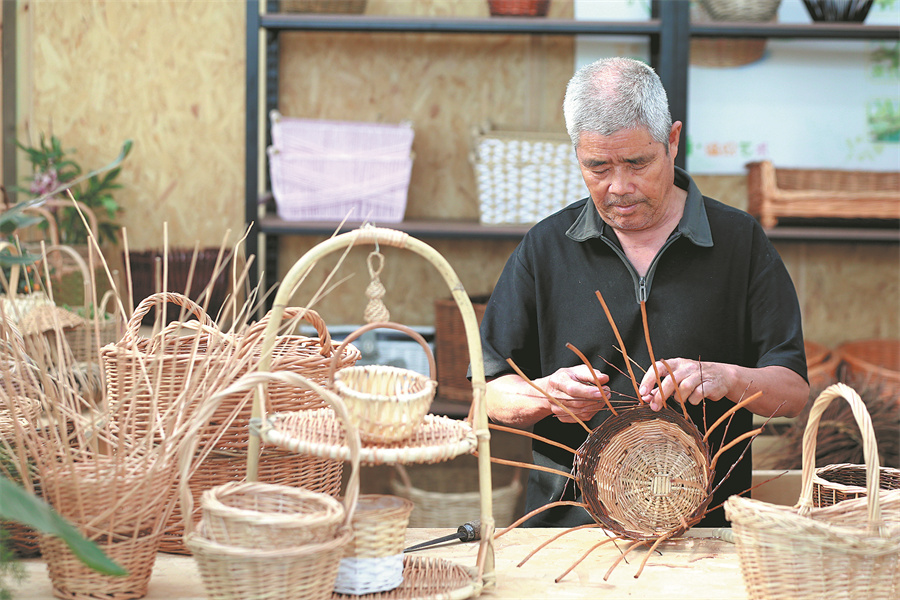
Linshu willow weaving was added to China's national intangible cultural heritage list in 2021.
With practiced hands, Zhao Qingyue, 68, a county-level inheritor of the craft, bends, loops and folds flexible willow branches into intricate woven patterns.
"In Caozhuang, weaving willow is as common as farming. Almost everyone here knows the craft," Zhao says.
Historical records show that villagers were already weaving baskets, grain containers and winnowing pans during the Tang Dynasty.
What began as a practical rural craft has grown into one of Linshu's pillar industries. Today, local producers make dozens of categories of products, from baskets and furniture to garden decor.
Willow products from Linshu are exported to more than 80 countries and regions, accounting for more than a quarter of China's total willow product exports, according to statistics provided by the county government.
The industry generated 950 million yuan ($139.8 million) in output in the first four months of this year, a year-on-year increase of 16.58 percent. Exports during the same period reached 268 million yuan, up 9.38 percent from the previous year, according to the latest figures.
Nearly 100,000 residents in Linshu county are engaged in the willow weaving industry.
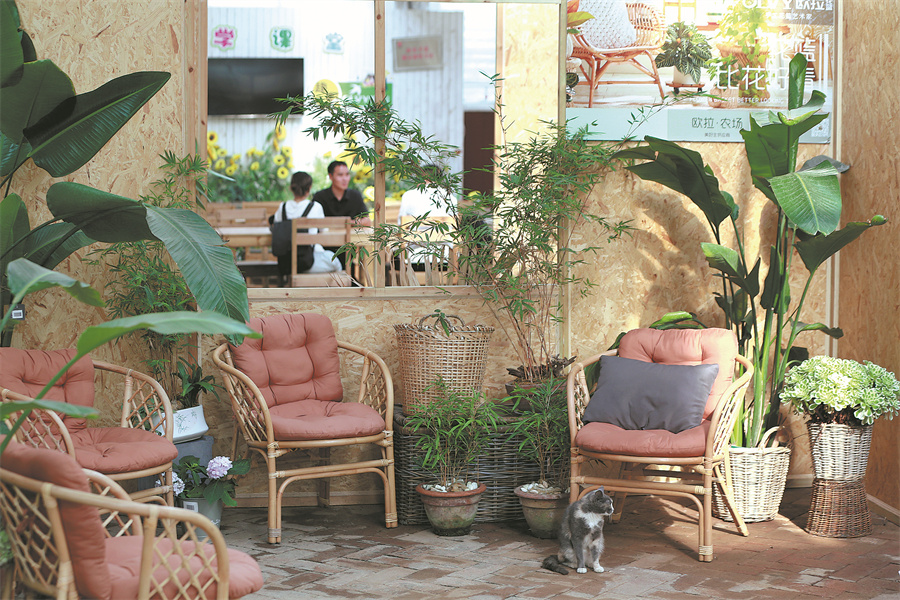
"Weaving willow lets me turn my passion into a career. That makes my work deeply rewarding," says Zhao.
While inheriting tradition, local practitioners keep innovating to inject vitality into the ancient craft.
"Traditional craftsmanship shouldn't be confined to old designs," says Zhang, who has learned willow weaving since childhood. He combines willow with iron, wood, rattan and straw, blending traditional techniques with contemporary aesthetics to expand the product range.
His company has developed more than 20,000 designs and color options of willow products, with over 90 percent exported to markets including the United States, Spain and Japan.
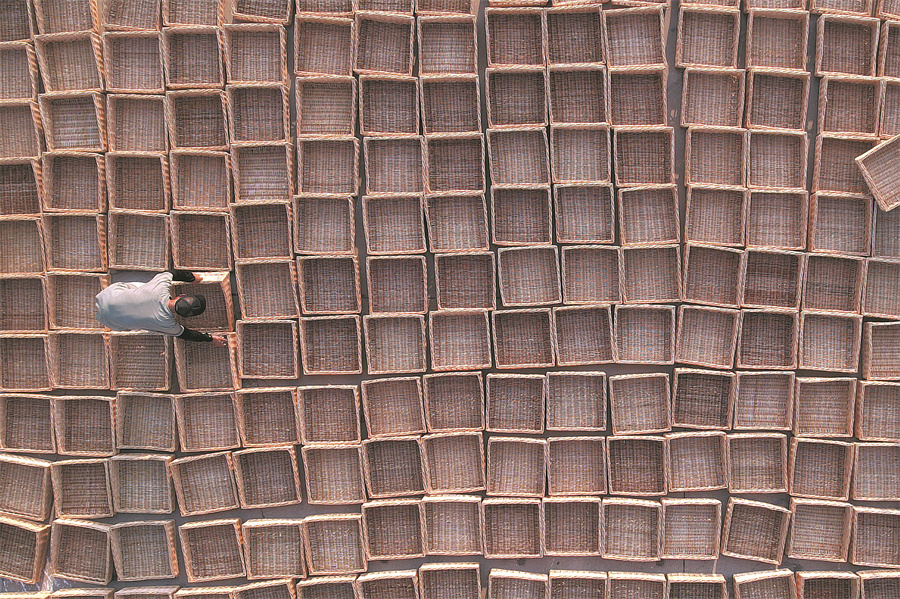
"Today, handmade willow crafts are used in homes around the world, bringing natural texture and warmth to gardens, living rooms and studies," Zhang says.
One of the company's enduring bestsellers is a fan-shaped firewood basket woven from unpeeled and white willow.
"This product is highly versatile. It works equally well for storing firewood by the fireplace, organizing garden tools or displaying fruit and flowers, which explains its lasting appeal," he says.
The company is also developing a woven willow or rattan sleeve that fits around a metal ice bucket, combining practicality with natural style.
"We believe it will become another popular product," Zhang says.
He is equally optimistic about China's domestic market. "Willow weaving reflects a natural, low-carbon and environmentally friendly lifestyle, which increasingly resonates with consumers," he says.
Cao Jiayue contributed to this story.
编辑:杜凤蕾